Your Cleanser’s pH Matters More Than Its Brand
Cleansing is the first step of healthy skin — and the wrong cleanser can quietly break your barrier. A Seoul dermatologist explains how to choose a face wash by pH, matched to your skin type.
 Dr. Jihye Kim
Medical doctor, specialist, Laplace Clinic · Laplace Clinic, Sinchon, Seoul · May 29, 2026 · 9 min read
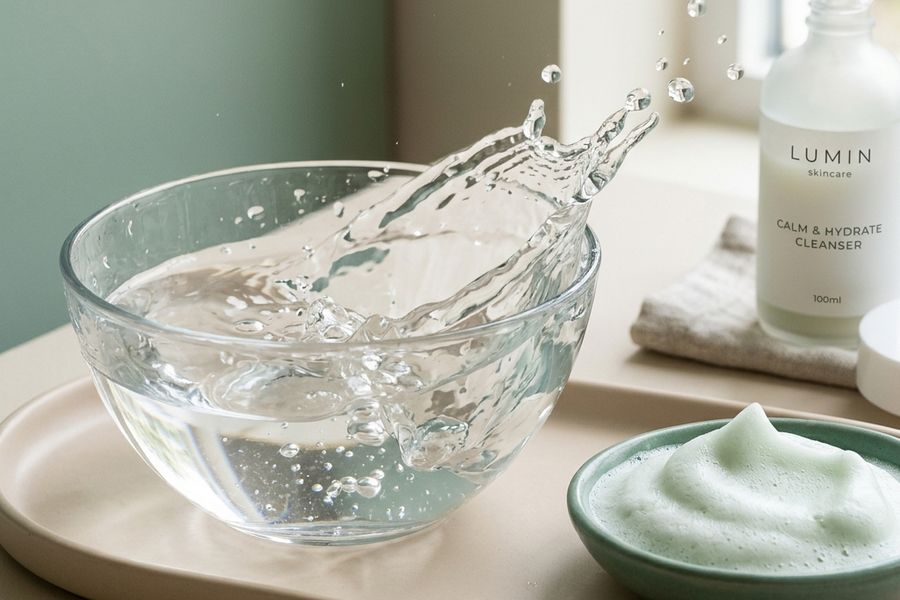
Washing your face looks like the one step in skincare you couldn’t possibly get wrong. Yet in the clinic, a surprising share of stubborn problems — tightness, flaking, redness, breakouts that no serum seems to fix — trace back to a single overlooked detail: the pH of the cleanser someone reaches for twice a day.
Cleansing is where a good routine is quietly built, or quietly undone.
Why your skin has a pH — and why it matters
Healthy skin is mildly acidic. The outermost layer, the stratum corneum, sits at a pH of roughly 4.5 to 5.5, held there by a thin film of sebum and sweat called the acid mantle. That acidity is not incidental. It keeps the enzymes that build and repair your barrier working properly, and it makes the surface inhospitable to the bacteria and fungi that drive acne and irritation.
Push that number in either direction and skin changes character. Below about 5.5 it tends to read oilier; above it, drier and more reactive. A cleanser that leaves your skin sitting at the wrong pH — even for the twenty minutes it takes to rebound — chips at the barrier a little more with each wash. Over weeks, that shows up as sensitivity, dehydration, or breakouts that seem to have no cause.
How to actually find a cleanser’s pH
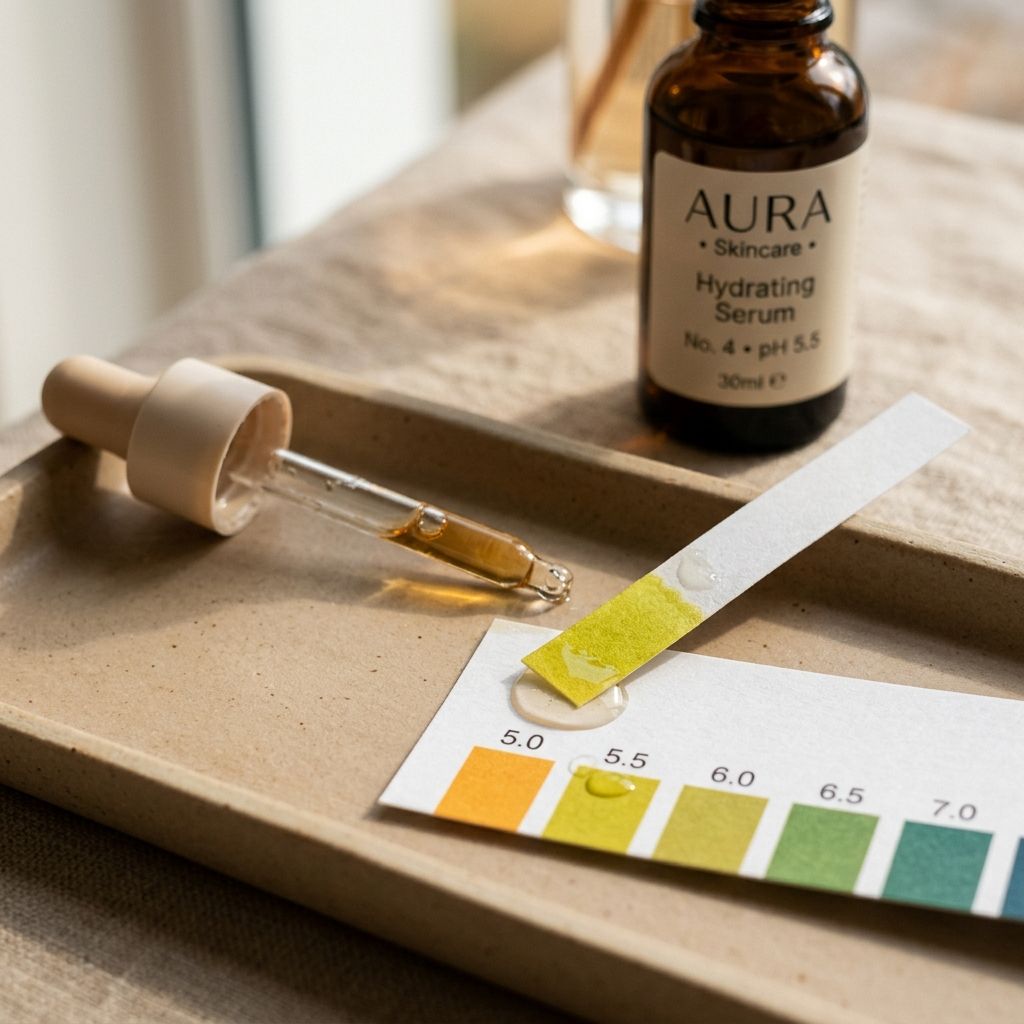
Brands rarely print it on the box, but you have options. Many gentle cleansers now advertise “pH-balanced” or a specific number — 5.5 is common. Cheap pH strips settle the question in seconds: dissolve a little product in distilled water and dip. And the ingredient list is a strong tell, which is exactly where the two families of cleansers part ways.
Weakly acidic cleansers: for dry, sensitive, and acne-prone skin
A weakly acidic cleanser sits around pH 4.5 to 6.0 — close to skin’s own acidity. The signature is on the label: gentle, amino-acid and coconut-derived surfactants such as cocamidopropyl betaine, disodium cocoamphodiacetate, and sodium lauroyl glutamate. They lift away oil and grime without stripping the lipids that hold your barrier together, so skin feels clean but still cushioned rather than tight.
Three skin types benefit most:
- Dry skin. It loses water easily and often drifts alkaline. A low-pH wash limits that loss; look for hyaluronic acid and panthenol on the label to add hydration and calm that lasts past the sink.
- Sensitive skin. Reactive skin that stings at the first harsh formula does far better with low-irritation surfactants and an acidity that matches its own.
- Acne-prone skin. This is the counterintuitive one. Breakout-prone skin often runs above pH 6.0, and a raised surface pH is precisely the environment acne bacteria thrive in. A gentle acidic cleanser nudges the surface back toward normal and helps quiet inflammation — where an aggressive “deep clean” only provokes more oil and more breakouts.
Weakly alkaline cleansers: strong cleansing for oily, thick skin
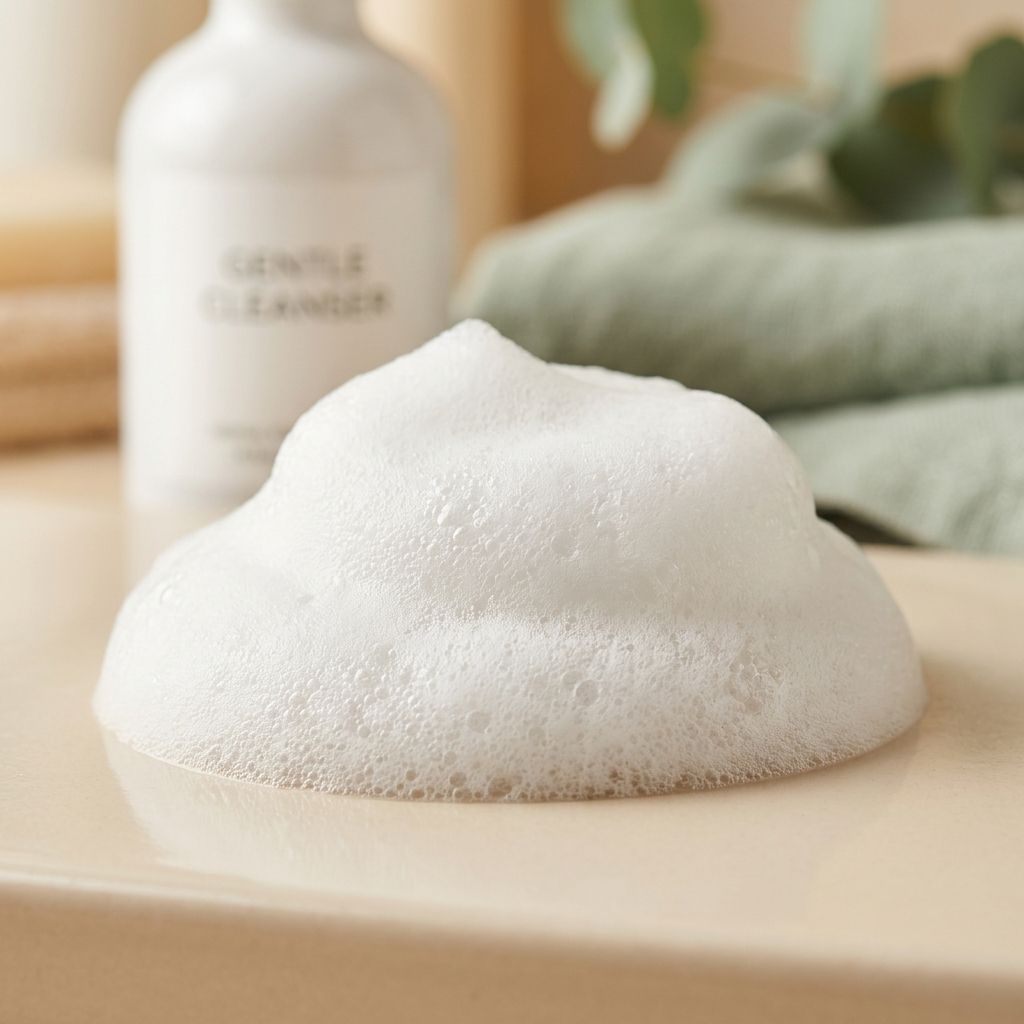
A weakly alkaline cleanser runs pH 7 to 9 and cleans with real force. Its surfactants — stearic acid, lauric acid, sometimes paired with salicylic acid — dissolve sebum deep in the pores. That is the source of the squeaky, ultra-clean feeling many people equate with skin that has been “properly” washed.
For the right skin, that power has a place:
- Oily skin that overproduces sebum and clogs easily can genuinely benefit from a deeper clean at the end of the day.
- Thick or heavily keratinized skin often tolerates — and sometimes needs — the extra lifting of dead surface cells.
But that squeaky feeling is also the warning. An alkaline cleanser doesn’t stop at sebum; it dissolves part of the barrier itself, leaving skin drier and its pH temporarily raised. If you use one, the follow-up is non-negotiable: an acidic toner or essence immediately afterward to bring your skin’s pH back into range. Skip it, and even oily skin eventually rebounds with more oil — or worse, real barrier damage.
So which one is yours?
The honest answer is that most people, most of the time, are better served by a weakly acidic cleanser. It is the safe default across dry, sensitive, and acne-prone skin, and it rarely harms oily skin either. Reserve alkaline formulas for genuinely oily or congested skin, use them at night rather than morning, and always chase them with something acidic.
A quick way to decide:
- Tight, flaky, stinging, or reactive → weakly acidic, with hydrating actives.
- Breakout-prone → weakly acidic; resist the urge to strip your skin clean.
- Oily, congested, or thick → weakly alkaline at night, followed by an acidic toner; acidic in the morning.
- Combination, or simply unsure → weakly acidic is the low-risk choice.
How you wash matters as much as what you use
Even the right cleanser can be undone by technique. A few habits protect the barrier you are trying to keep:

- Use lukewarm water, never hot. Heat strips lipids and inflames the barrier.
- Build a full lather and let the foam, not friction, do the work. Massage gently for 30 to 60 seconds; never scrub.
- Don’t over-wash. Twice a day is plenty for most skin; a third wash “because it felt oily” usually makes oil worse.
- Moisturize within a minute. Damp skin loses water fast — seal it while it is still slightly wet.
When to stop guessing and see a dermatologist
Healthy skin is not built overnight, and it is not built by product-hopping. If tightness, breakouts, or sensitivity persist despite a sensible, pH-appropriate routine, treat that as a signal rather than a failure — an underlying issue such as a compromised barrier, rosacea, or a specific form of acne may need a professional diagnosis. A short consultation can save months of trial and error.
Choose your cleanser the way you would choose any tool: for the job in front of it. Match the pH to your skin, wash gently, moisturize fast, and give it the weeks it needs. The most important step in your routine is also the easiest one to get right.
Frequently Asked Questions
Why does the pH of a cleanser matter?
The pH of a cleanser is crucial because it affects the skin's natural barrier, which ideally maintains a slightly acidic pH. Using a cleanser with a pH closer to the skin's natural level helps preserve this barrier, preventing irritation and moisture loss.
How can I determine the right pH level for my skin type?
Generally, a pH level between 4.5 and 6 is suitable for most skin types. For oily skin, a slightly lower pH may help control excess oil, while sensitive or dry skin may benefit from a pH closer to the skin's natural level of around 5.5.
Can I test the pH level of my current cleanser at home?
Yes, you can test the pH level of your cleanser at home using pH test strips. Dip a strip into the cleanser solution and compare the color change to the provided pH scale to determine its level.
This article is for general information and is not medical advice. Consult a qualified healthcare provider about your individual situation.