Return to Your Essence: Why We Don't Chase Someone Else's Face
Most patients arrive with a photograph of someone else. The more useful reference is a photograph of themselves, ten years ago. A dermatologist on the philosophy of balance behind Laplace.
 Dr. Jieun Youn
Founding Director, Laplace Clinic · Laplace Clinic, Sinchon, Seoul · July 15, 2026 · 7 min read

Almost every consultation begins the same way. A phone is unlocked, turned around, and slid across the desk. On the screen is a face — an actress, a model, sometimes a friend. "Like this," the patient says. And what they mean is rarely what they say.
I have learned to ask a second question before I answer the first one. Not "what do you want to change," but "when did you last look at yourself and feel like yourself?" The answer is almost never a name. It is a year.
The Question Behind the Photograph
When someone shows me a stranger's face, they are usually not asking to become that person. They are pointing at a quality they have lost track of in their own reflection — an even skin tone, a rested look around the eyes, a jawline that reads as awake rather than tired. The photograph is a vocabulary problem, not a goal.
This distinction matters clinically, not just philosophically. A face copied from someone else has to fight its own anatomy: different bone structure, different fat distribution, different skin thickness, different aging pattern. The result reads as effort. Everyone can see the work, and no one can see the person. A face restored toward its own earlier state has anatomy on its side. Nothing has to be overcome — only recovered.
Your Own Prime, Not Someone Else's
There is a Korean expression for the period when a person looked most like the best version of themselves — their prime. Everyone has one. It is not adolescence, and it is not a magazine cover. For most people it is a stretch of years somewhere in their late twenties or thirties when the face still had structural support and the eyes still had rest in them.

That is the reference photograph I want. Not because the past is better than the present, but because it is the only reference that belongs to the patient. It tells me what their volume looked like when it was intact, how their skin reflected light before texture changed, where their contour used to sit. It converts an aesthetic conversation into a structural one.
The most useful reference photograph is not a celebrity's. It is your own, ten years ago.
When "Age Is Just a Number" Became a Clinical Statement
For most of medical history, that phrase was a consolation. It has quietly become a description. People are working longer, meeting more people later in life, changing careers in their fifties, and staying physically active into decades that used to be reserved for rest. Health span and social span have both stretched.
What has not stretched at the same rate is the face. A person can feel, function, and live at forty-five much as they did at thirty-five, and still meet a reflection that reports something else. The gap between how someone lives and how their face reports on that life is, I think, the real reason aesthetic medicine has moved from correction toward maintenance.
Maintenance is a different discipline from correction. Correction asks what is wrong. Maintenance asks what is still working, and how to keep it working — which is closer to how the rest of medicine already thinks.
The Name: Ra, and the Idea of Daily Return

In Egyptian myth, the sun god Ra passes through the night and returns at dawn. Not a single transformation, but a return that happens again, and again, and again. It is a useful image for what maintenance actually feels like from inside a treatment plan.
Skin does not improve on a straight line. It improves in cycles — a stimulus, an inflammatory response, a repair phase, a plateau, another stimulus. Collagen is not a purchase; it is a habit. The patients whose results hold the longest are rarely the ones who did the most in a single session. They are the ones who came back on rhythm.
Four Principles of Balance
These are the principles I return to when a treatment plan starts drifting toward doing more instead of doing right.
- Balance of time — the goal is to return you toward the healthy, well-supported version of your face from roughly a decade ago, not toward an age you have never been.
- Naturalness — treatments should work with your existing structure, using restrained doses and gradual layering rather than a single dramatic intervention.
- Daily return — results are maintained by rhythm, not by intensity. A sustainable plan you will actually follow beats an aggressive one you will abandon.
- Restoring essence — the aim is to recover what is characteristically yours, so that the face people recognise is still the one they knew.
What This Looks Like in the Treatment Room
In practice, this philosophy makes consultations longer and treatment lists shorter. Before anything else, I look at three structural questions: is this face short on volume, carrying volume it can no longer support, or thin in the skin itself? Those three patterns age in completely different directions, and they call for opposite interventions — one asks to be filled, one asks to be reduced and tightened, one asks to be reinforced from within.
Getting that classification wrong is the single most common reason a technically well-performed treatment still looks wrong. Volume added to a face that is already overloaded accelerates the very heaviness the patient came in to fix. Tightening applied to a depleted face makes it look more depleted. The procedure was fine; the diagnosis was not.
So the first appointment at our clinic is often the least eventful one. We map structure, skin quality, pigment behaviour, and lifestyle, and only then decide what — if anything — should happen that day.
The Secret Recipe, One Spoon
The outcome I am proudest of is not the one that gets noticed. It is the one where a colleague says, "You look well lately," and cannot say why. No one names a procedure. No one asks what you had done. The face simply reads as rested, even, and awake — which is what people actually mean when they say they want to look younger.
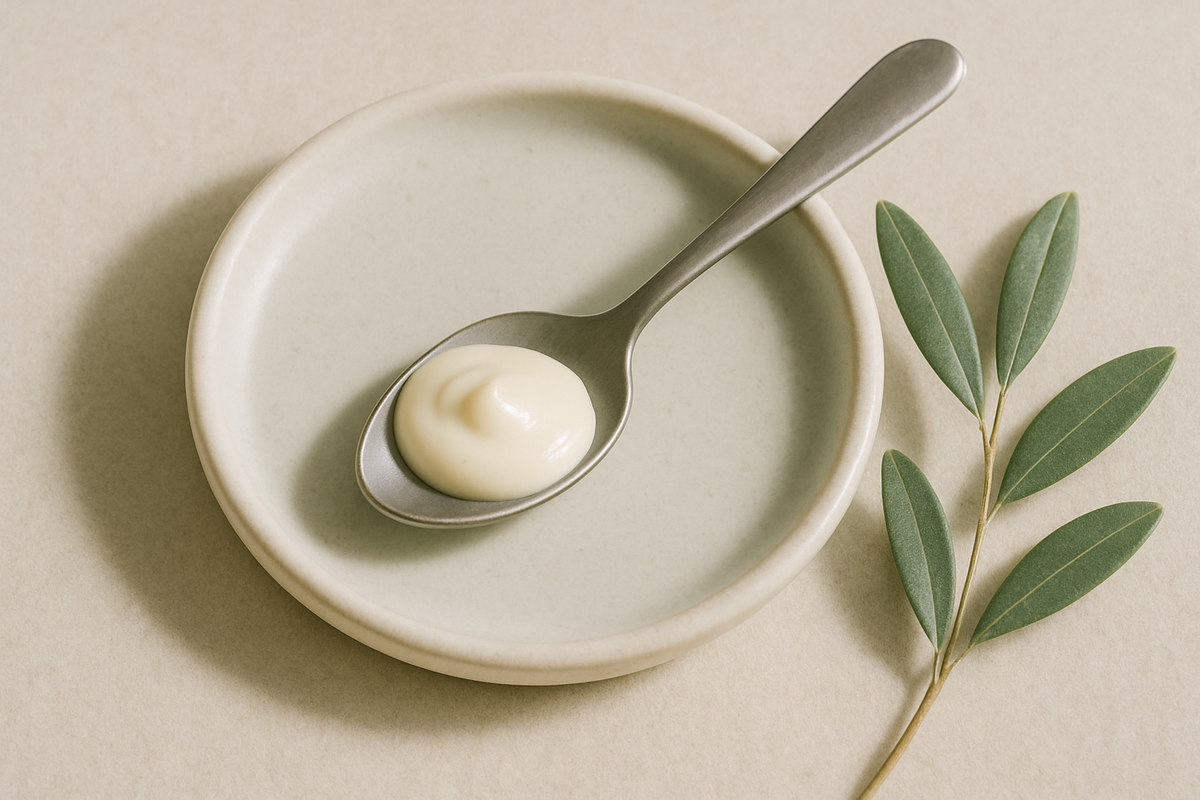
That result comes from restraint more often than from technology. One spoon of a quiet recipe, repeated on rhythm, will outperform a dramatic intervention almost every time — because the dramatic version has to be maintained forever at the same intensity, while the quiet one compounds.
We do not create change. We design the process of returning to the beauty that was already yours.
This is the first article in a series built from the Laplace clinical framework. The pieces that follow move from philosophy into the treatment room itself — facial harmony, skin tone, skin texture, and men's skin — each one an explanation of how balance is actually diagnosed and restored.
Frequently Asked Questions
Is it realistic to aim for how I looked ten years ago?
Not as a literal reversal, no. The goal is directional: restoring the volume support, skin density, and even tone that were intact then, so your face reads as rested and characteristically yours. Bone structure and skin history cannot be undone, but much of what reads as 'tired' is structural and recoverable.
Why does my doctor spend so long on diagnosis before treating?
Because the three common aging patterns — volume-deficient, volume-excess, and thin skin — call for opposite interventions. Filling a face that is already overloaded, or tightening one that is depleted, makes the underlying problem worse even when the procedure itself is performed well.
Is a natural result just a weaker version of a dramatic one?
No. A natural result is usually a layered one: smaller doses across several mechanisms — structural support, skin density, tone — repeated on a schedule. It compounds over time, whereas a single dramatic intervention has to be maintained indefinitely at the same intensity.
This article is for general information and is not medical advice. Consult a qualified healthcare provider about your individual situation.