The Science of Pore Tightening: Laplace Clinic's 3-Step Multi-Dimensional Solution
Why do pores enlarge, and why fail with simple skincare? Dr. Jieun Youn presents Laplace Clinic's 3-step multi-dimensional pore solution combining pore clearing, Silkfirm Microneedle RF, LDM, Chitosan, and regenerative pore injections (Micro-Toxin, ECM, Ultracol, and PRP).
 Dr. Jieun Youn
Founding Director, Laplace Clinic · Laplace Clinic, Sinchon, Seoul · August 20, 2026 · 6 min read
Enlarged pores are among the most persistent skin concerns, often resistant to over-the-counter astringents and superficial facials. At Laplace Clinic in Sinchon, Seoul, Dr. Jieun Youn approaches pore refinement through structural medical dermatology—addressing both epidermal sebum congestion and dermal collagen degradation.
Clinical Overview: Pores enlarge through a 4-stage progression: entrance clogging, sebum accumulation, radial dilation, and vertical elasticity loss. Laplace Clinic's 3-Step Perfect Pore Solution combines Pore Clear extraction, Silkfirm Microneedle RF with LDM and Chitosan, and targeted Regenerative Pore Injections (Micro-Toxin, Re2O ECM, Ultracol, and PRP) to regulate sebaceous activity and rebuild the dermal collagen scaffolding.
Why Do Pores Enlarge? The 4-Stage Etiology
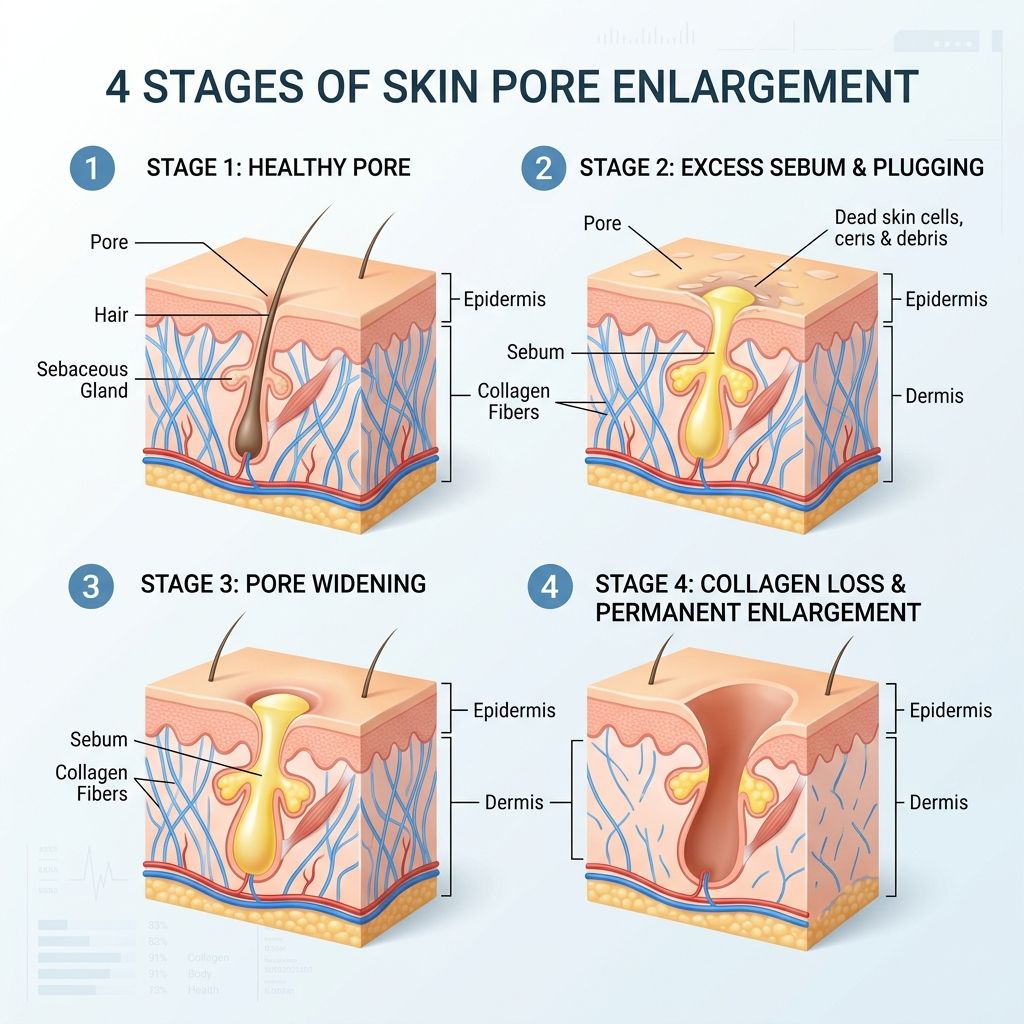
Pore dilation is rarely caused by a single factor. Clinically, pore enlargement progresses through four distinct anatomical stages:
1. Entrance Clogging: Accumulation of dead keratinocytes, environmental micro-particles, and Demodex mites obstructs the follicular opening.
2. Sebum Accumulation: Hyperactive sebaceous glands continuously produce oil that becomes trapped behind the keratin plug.
3. Radial Pore Dilation: Internal hydrostatic pressure forces the pore canal to expand radially, creating visible horizontal oil pores.
4. Dermal Elasticity Loss: As collagen and elastin fibers degrade with age and UV exposure, the structural support surrounding the pore collapses, causing pores to sag vertically into oval, teardrop shapes.
Laplace Clinic's 3-Step Multi-Dimensional Pore Solution
Because enlarged pores involve both epidermal blockage and dermal structural laxity, Dr. Jieun Youn engineered a 3-step synergistic protocol to target every anatomical layer:
Step 1: Pore Clear (Follicular Unclogging & Sebum Balance)
The first step focuses on deep follicular hygiene. Specialized medical extractions remove oxidized sebum plugs, dead keratinocytes, and Demodex mites without causing mechanical trauma. By clearing obstructed follicular pathways, natural sebum drainage is restored, neutralizing inflammation-inducing micro-environments.
Step 2: Silkfirm (Microneedle RF) + LDM Ultrasound & Chitosan
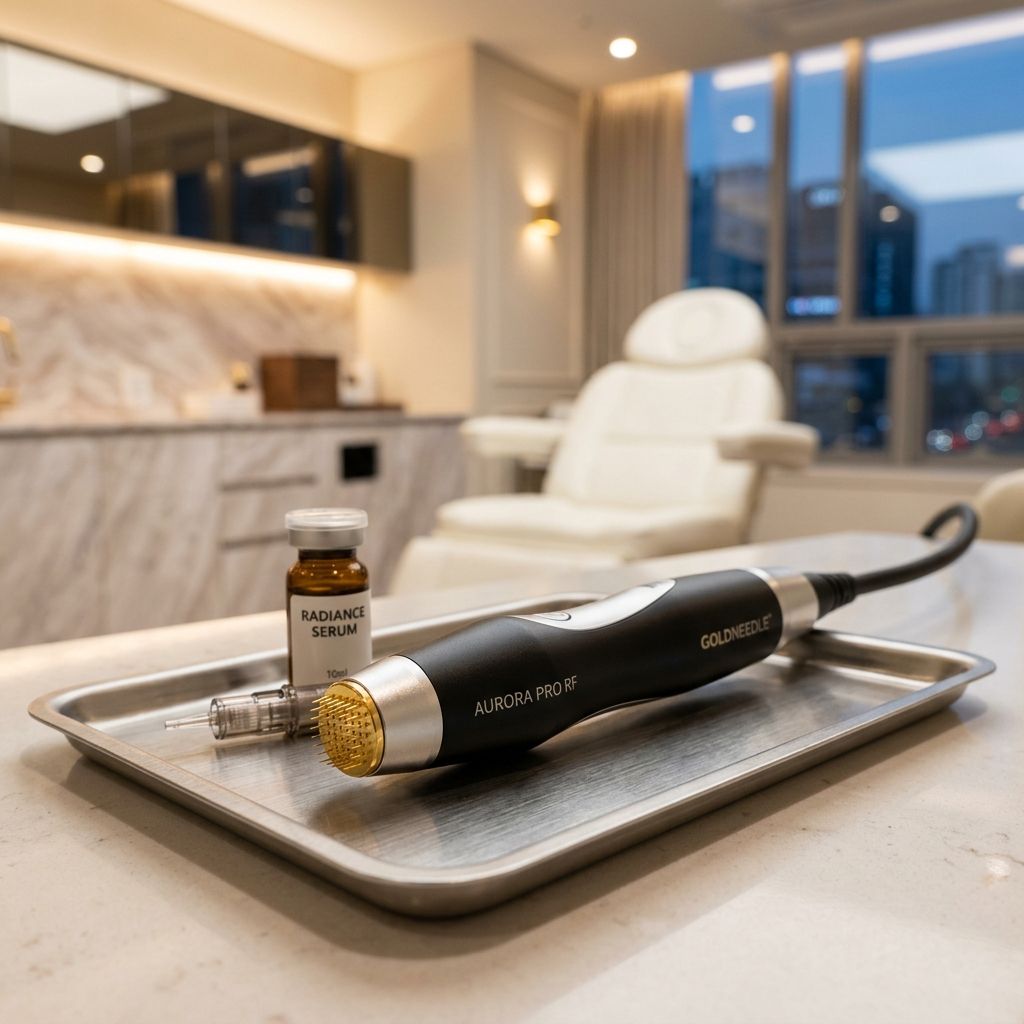
Step 2 targets structural remodeling. Silkfirm (Micro-Needle RF) delivers targeted radiofrequency thermal energy directly into the peri-sebaceous dermis. This dual-action thermal stimulation coagulates overactive sebaceous microvessels and triggers robust neocollagenesis to tighten dilated pore walls. Subsequent LDM dual-frequency ultrasound and bio-active Chitosan soothe thermal redness, repair epidermal barrier function, and enhance skin elasticity.
Step 3: Targeted Pore & Regenerative Injection (Micro-Toxin, ECM, Ultracol & PRP)
The final step achieves long-term oil balance and dermal structural replenishment through customized biological injections:
• Micro-Toxin (Pore Toxin): Delivers micro-doses of neuromodulator into the superficial dermis to relax arrector pili micro-muscles and inhibit hyperactive sebaceous glands, producing an instant pore-tightening effect.
• ECM Skin Booster (Re2O): Restores the extracellular matrix surrounding follicular walls, replenishing essential structural proteins and restoring dense dermal hydration.
• Ultracol (PDO Collagen Stimulator): Utilizes micro-spherical polydioxanone (PDO) particles to stimulate prolonged neocollagenesis, rebuilding structural volume to support aging, sagging teardrop pores from within.
• Autologous PRP (Platelet-Rich Plasma) for Global & Western Skin: For patients—particularly Western individuals with thinner skin prone to photoaging and elasticity loss—autologous PRP provides a rich cocktail of concentrated growth factors. This accelerates tissue regeneration, strengthens follicular integrity, and revitalizes skin texture from the deepest dermal layers.
Ideal Candidates for Laplace's Pore Solution
This multi-dimensional protocol is particularly recommended for individuals experiencing:
• Rough, uneven 'orange-peel' skin texture with wide visible pores.
• Excessive T-zone sebum production that causes makeup to break down rapidly.
• Elongated vertical saggy pores resulting from dermal elasticity loss and collagen depletion.
• Global and Western skin types with thinner dermal layers requiring structural collagen synthesis (Ultracol/PRP).
• Persistent pore concerns that have failed to respond to cosmetic astringents or superficial facials.
Frequently Asked Questions (Clinical Guide)
Q: Can enlarged pores permanently shrink? A: While anatomical pore architecture is genetically defined, combining sebaceous gland regulation with dermal collagen remodeling (Silkfirm, ECM, Ultracol, and PRP) permanently tightens visible pore diameter and prevents recurrent stretching.
Q: What is the difference between horizontal pores and vertical saggy pores? A: Horizontal pores are driven by excess sebum accumulation expanding the pore canal, whereas vertical pores occur when aging dermis loses collagen and elastin support, causing pores to sag into teardrop shapes. Laplace's 3-step solution addresses both sebum suppression and dermal scaffolding reinforcement.
Q: Why is PRP or Ultracol recommended for certain pore patients, such as Western skin types? A: Western and fair skin types often have a thinner dermis that loses structural collagen rapidly under UV exposure. Adding Ultracol (PDO stimulator) or autologous PRP supplies concentrated growth factors and prompts endogenous collagen synthesis, firmly anchoring dilated pore walls.
Frequently Asked Questions
Can enlarged pores permanently shrink?
While anatomical pore architecture is genetically defined, combining sebaceous gland regulation with dermal collagen remodeling (Silkfirm, ECM, Ultracol, and PRP) permanently tightens visible pore diameter and prevents recurrent stretching.
What is the difference between horizontal pores and vertical saggy pores?
Horizontal pores are driven by excess sebum accumulation expanding the pore canal, whereas vertical pores occur when aging dermis loses collagen and elastin support, causing pores to sag into teardrop shapes. Laplace's 3-step solution addresses both sebum suppression and dermal scaffolding reinforcement.
Why is PRP or Ultracol recommended for certain pore patients, such as Western skin types?
Western and fair skin types often have a thinner dermis that loses structural collagen rapidly under UV exposure. Adding Ultracol (PDO stimulator) or autologous PRP supplies concentrated growth factors and prompts endogenous collagen synthesis, firmly anchoring dilated pore walls.
This article is for general information and is not medical advice. Consult a qualified healthcare provider about your individual situation.