Where Balance Begins: The Design Brief Behind Laplace
A clinic is a clinical instrument as much as a space. Why Laplace was designed around natural light, botanicals and unhurried rooms — and what that has to do with the quality of a diagnosis.
 Dr. Jieun Youn
Founding Director, Laplace Clinic · Laplace Clinic, Sinchon, Seoul · July 18, 2026 · 6 min read
Patients rarely describe a clinic in architectural terms. They describe how they felt in it. Rushed. Exposed. Overwhelmed by a menu of options. Or — less often — unhurried enough to ask the question they actually came to ask.
That last state is not a hospitality nicety. It is a clinical input. A patient who feels rushed gives you an abbreviated history, agrees to a plan they have not thought about, and does not tell you about the pigmentation that has been quietly worsening for two years. The room shaped the diagnosis before the doctor did.
Light, Because Skin Is Read in Light
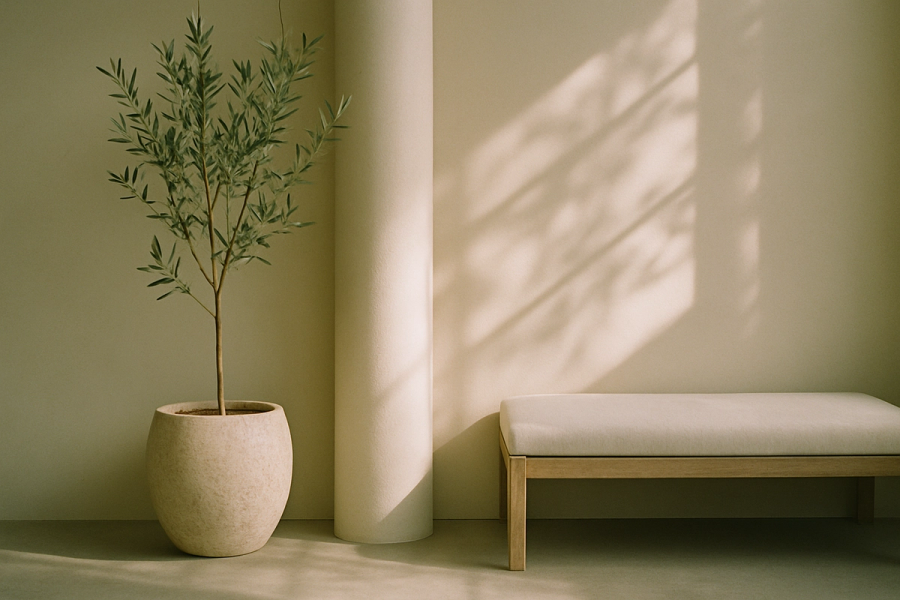
The first decision was daylight. Aesthetic dermatology is a visual discipline, and every judgement — pigment depth, redness, texture, the way light travels across a cheek — changes under different illumination. Skin assessed under hard overhead lighting reports differently than the same skin at a window.
The practical consequence is that a patient should be able to see themselves the way the world sees them, not the way a fluorescent panel does. Soft, directional, natural light is more honest — both for the assessment and for the conversation about it afterwards. It is difficult to have a calibrated discussion about a result in a room that flatters or punishes.
Plants, Stone, Linen: Materials That Lower the Pulse

The palette is deliberately quiet — plaster, travertine, unbleached linen, warm wood, and living botanicals. Olive and other slim-leafed trees appear throughout, less as decoration than as evidence that something in the room is being kept alive and well.
The reference points are wellness spaces rather than medical ones: a good spa, a well-made hotel lobby, a quiet study. This is a considered choice. Clinical white signals procedure. It puts a patient into the mode of enduring something. Warm, tactile materials signal care and maintenance — which is the register this kind of medicine actually belongs in, since almost nothing we do is a one-time event.
Clinical white tells a patient to brace. Warm materials tell them they are here to maintain something.
A Room Where a Consultation Can Take Its Time
The most important room in an aesthetic clinic is not the laser room. It is the consultation room. The plan for a face is decided there, and everything downstream — device selection, dose, sequence, interval — is only the execution of that plan.

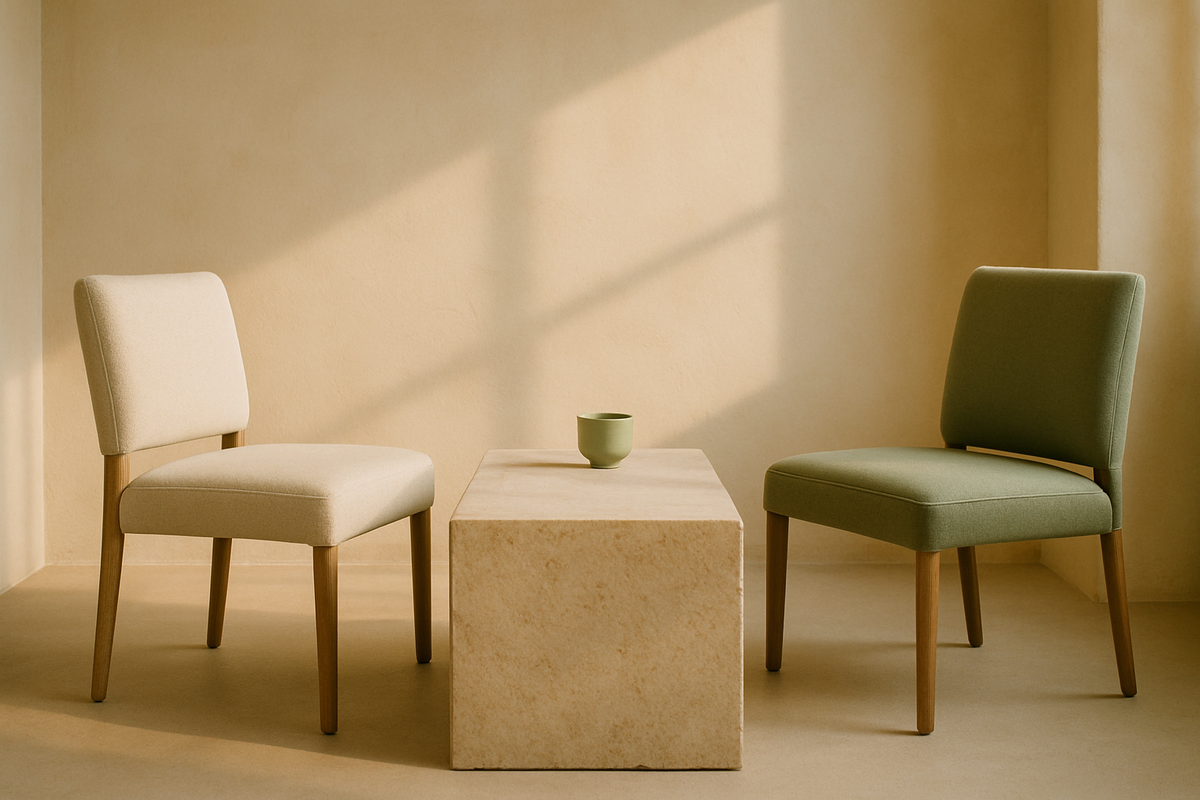
So the consultation space is built to hold a long conversation without pressure: seated at the same height, screens angled so the patient can see what the doctor sees, and enough acoustic privacy that nobody lowers their voice. Concerns about aging are personal. People edit themselves when they can be overheard, and an edited history produces an edited plan.
Privacy as a Circulation Problem
Discretion in a clinic is mostly a matter of routes, not of doors. Where do waiting patients sit relative to those leaving with visible post-treatment redness? How many times does someone cross a public area between the consultation room and the treatment room? Can a patient who wants to be invisible be invisible?
These questions look like interior design and are really about compliance. Patients who find a visit socially costly postpone the next one, and postponement is the main reason maintenance plans fail. A layout that respects privacy quietly improves outcomes over years.
The Space and the Philosophy Are the Same Argument
Our clinical philosophy is restraint: work with the face's existing structure, use restrained doses, repeat on rhythm, and let results compound. A space that shouted would contradict that on arrival.
So there are no procedure menus on the walls, no before-and-after galleries staged in the waiting area, no visual pressure to add something to the day's plan. What is on offer is a diagnosis first, and only then a treatment — and the room is arranged so that sequence feels natural rather than unusual.
What to Notice on a First Visit
If you are choosing a clinic — ours or any other — the space will tell you a great deal before anyone examines you. A few things worth noticing:
- Is there natural or at least soft, neutral light where your skin is actually assessed?
- Does the consultation happen sitting down, at eye level, with time to ask a second question?
- Are you shown your own skin — imaging, close-up, structure — before you are shown a treatment name?
- Can you leave without crossing a room full of waiting patients?
- Does anything in the room pressure you to decide today?
None of these are luxuries. Each one is a small structural decision about whether the clinic is organised around procedures or around patients — and over a decade of maintenance, that difference compounds as surely as collagen does.
Frequently Asked Questions
Does clinic design actually affect medical outcomes?
Indirectly but meaningfully. Lighting affects how accurately skin is assessed, privacy and pacing affect how complete a patient's history is, and comfort affects whether they return on schedule. Since most aesthetic dermatology depends on maintenance intervals, anything that improves return rates improves long-term results.
What should I look for when choosing an aesthetic clinic?
Whether your skin is assessed in soft, neutral light; whether the consultation happens seated and unhurried; whether you are shown your own skin and structure before you are shown a treatment name; and whether you feel any pressure to decide the same day.
Why do some clinics feel like spas rather than hospitals?
Because most aesthetic dermatology is maintenance rather than one-time correction. A clinical, procedure-first environment puts patients in the mindset of enduring an event; a warmer environment matches the reality of ongoing, low-intensity care repeated over years.
This article is for general information and is not medical advice. Consult a qualified healthcare provider about your individual situation.