Flying After Skin Treatments: How to Plan Your Itinerary & Flight Aftercare
A dermatologist-backed guide for international visitors on timing skin procedures before your flight home, managing flight cabin dryness after lasers or skin boosters, and essential airport aftercare tips.
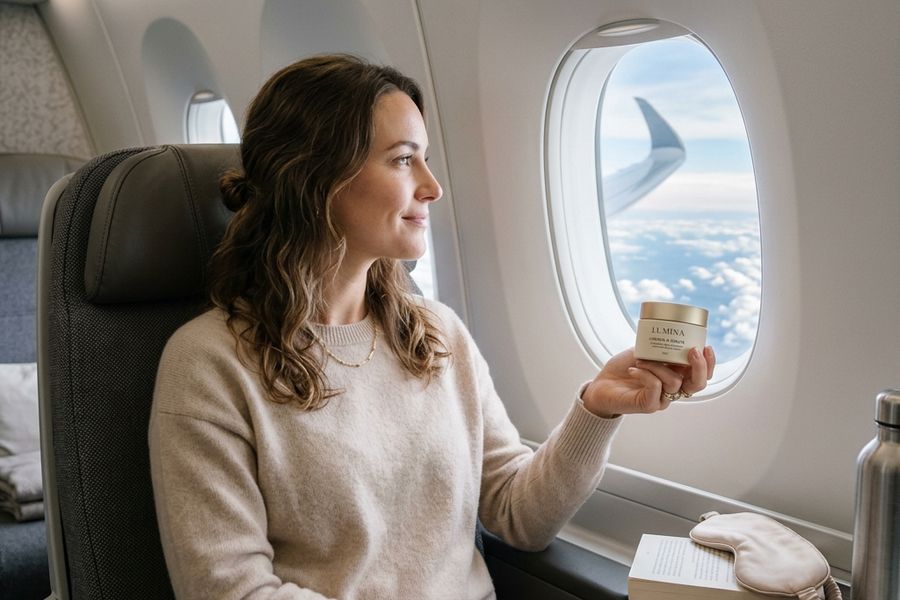
Combining aesthetic treatments with a trip to Seoul requires thoughtful timing. On international beauty forums, one question appears with anxiety-inducing regularity: 'Can I fly right after getting Rejuran or laser treatment?' Commercial aircraft cabins maintain extremely low humidity levels (often under 10–15%), creating a hyper-dry environment that can severely stress compromised post-procedure skin.
Golden Rule: Schedule skin procedures requiring dermal injections or aggressive lasers at least 48 to 72 hours before your flight home. For zero-downtime facials or gentle toning, 24 hours is usually sufficient.
1. Procedure Downtime & Flight Scheduling Timeline
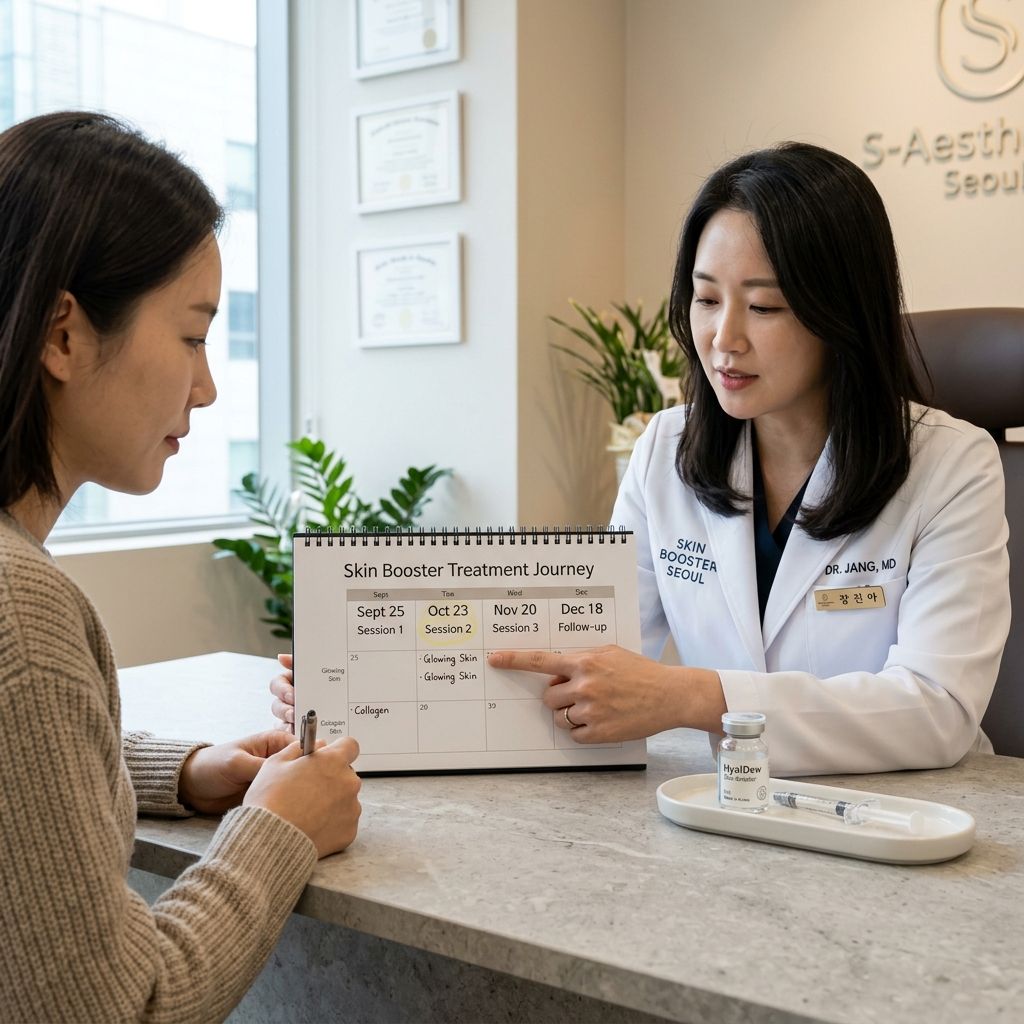
Not all skin treatments carry the same travel recovery requirements. Understanding downtime allows you to structure your Seoul itinerary safely:
- Skin Boosters (Rejuran PN, Juvelook, PLLA): Micro-injections create small raised bumps ('embossing') that last 24 to 48 hours. Schedule at least 48 hours before your flight so skin swelling settles.
- Microneedling & RF (Potenza, Secret RF): Micro-channels remain open for 12 to 24 hours. Schedule 48–72 hours prior to departure to prevent cabin dust and bacterial irritation.
- Resurfacing Lasers (CO2, Fractional): High downtime with scabbing or peeling. Requires 5–7 days of local recovery before flying.
- Gentle Toning & Hydrating Facials (Aqua Peel, Laser Toning, Genesis): Minimal to zero downtime. Safe to undergo 24 hours prior to departure.
2. Why Airplane Cabin Air Threatens Post-Procedure Skin
During long-haul flights, recirculated cabin air lacks natural moisture. When your epidermal barrier is freshly micro-needled or laser-stimulated, trans-epidermal water loss (TEWL) accelerates rapidly:
- Desiccation: Low humidity pulls moisture directly out of freshly treated dermal tissues, causing itching and tightness.
- Inflammation spike: Dehydrated post-procedure skin produces inflammatory signals, prolonging erythema (redness).
- Barrier vulnerability: Airborne cabin dust can enter micro-wounds if proper barrier occlusives are not applied.
3. In-Flight Aftercare Routine & TSA Carry-On Bag
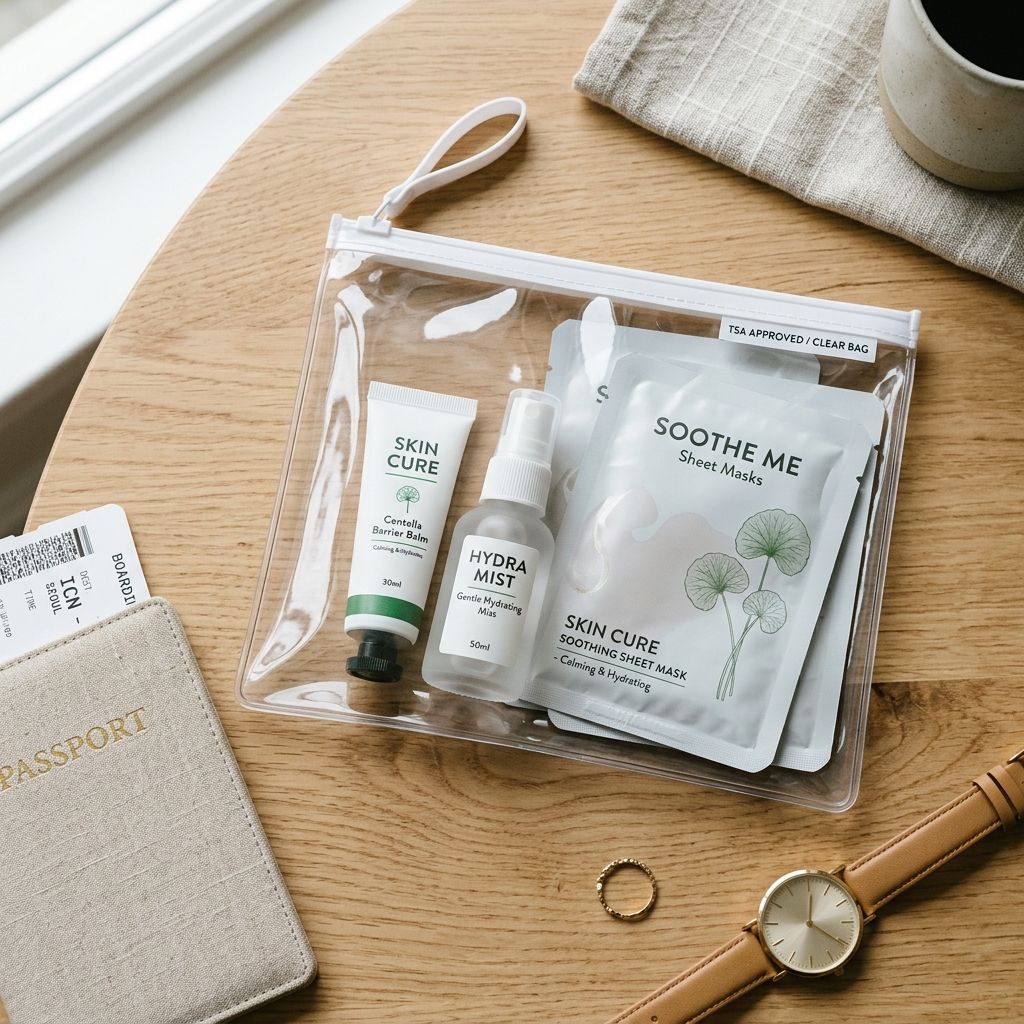
Pack a specialized post-procedure carry-on pouch to protect your skin barrier in flight:
- Heavy Occlusive Barrier Cream (Centella / Ceramide): Apply a generous layer of Madecassoside or Ceramide cream before boarding to lock in moisture.
- Alcohol-Free Hydrating Mist: Spray periodically followed immediately by an occlusive layer (avoid alcohol-based mists that evaporate and dry skin further).
- Soothing Sheet Masks (Hydrogel): If your flight exceeds 6 hours, apply a sterile soothing mask mid-flight, followed by barrier cream.
- Physical Sunscreen (Mineral SPF): Cabin windows at high altitudes expose skin to concentrated UV radiation; apply mineral zinc oxide sunscreen if sitting near a window.
4. Post-Flight Recovery Checklist
- Avoid hot showers, saunas, and intense exercise for 3 days post-flight.
- Do not use exfoliating acids (AHA, BHA, PHA) or Vitamin C serums for 7 days after microneedling or lasers.
For detailed post-procedure recovery instructions, read our guide on post-microneedling recovery protocols and explore verified clinics on our Clinic Map.
Frequently Asked Questions
Can I fly on a long-haul flight immediately after getting skin treatments in Korea?
Non-invasive treatments (Aqua Peel, mild laser toning, ONDA lifting) are 100% safe to fly immediately. Micro-injection treatments (Rejuran, Juvelook) or deep microneedling are best scheduled at least 24–48 hours before long-haul flights to avoid cabin air dehydration and swelling.
How does airplane cabin pressure and dry air affect post-treatment skin?
Cabin humidity drops below 20% and cabin pressure fluctuates, causing rapid trans-epidermal water loss (TEWL) and temporary puffiness. Apply rich ceramide barrier creams, sheet masks, and physical sunstick during the flight.
What essential skincare items should I pack in my carry-on bag for post-procedure flight aftercare?
Pack a gentle hydrating cleanser, travel-size Centella/Cica barrier balm, hyaluronic acid serum, hydrocolloid pimple patches, and a high-SPF mineral sunscreen stick.
This article is for general information and is not medical advice. Consult a qualified healthcare provider about your individual situation.